
Medical Office Construction in San Antonio, TX: What Practices Need to Know
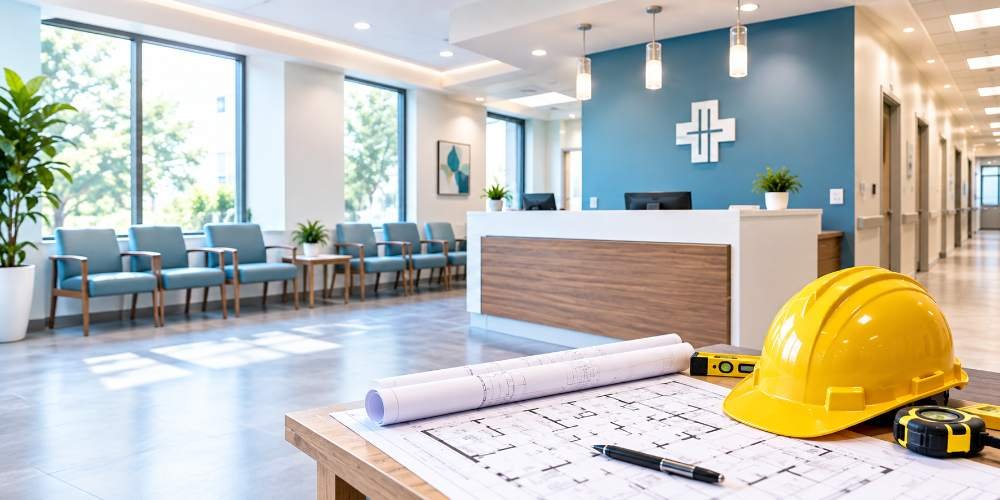
San Antonio’s healthcare sector is expanding rapidly — new urgent care clinics, family medicine practices, dental offices, and specialty practices are opening across the city to keep up with population growth. But medical office construction is one of the most regulated and technically demanding categories of commercial buildout, involving strict code requirements that go far beyond a standard office or retail space.
This guide covers what makes medical construction unique, what to expect during the process, and how to choose a contractor equipped to handle it correctly.
What Makes Medical Office Construction Different?
Medical facilities are held to a higher regulatory standard than most commercial spaces due to the nature of patient care. Key differences include:
- Specialized electrical and plumbing infrastructure — exam rooms, procedure rooms, and imaging equipment often require dedicated electrical circuits and specific plumbing configurations
- Infection control requirements — certain spaces require specific ventilation, air filtration, and surface material standards to support proper infection control
- ADA compliance — medical facilities must meet strict accessibility standards for exam rooms, restrooms, and patient pathways
- Specialty-specific build requirements — imaging suites, surgical centers, and labs each have unique structural, electrical, and shielding requirements beyond standard exam room construction
- Life safety code compliance — medical occupancies often fall under stricter fire and life safety code classifications than standard commercial spaces
- HIPAA-conscious layout considerations — while not a building code itself, thoughtful layout design supports patient privacy in waiting areas, check-in, and exam room sightlines
Common Types of Medical Construction Projects
- Urgent care clinics — exam rooms, triage areas, and sometimes basic imaging or lab space
- Family and primary care practices — exam rooms, nurse stations, and administrative space
- Dental offices — operatories with specialized plumbing and equipment requirements
- Specialty practices — dermatology, orthopedics, and other specialty-specific procedure room requirements
- Diagnostic and imaging centers — specialized structural and shielding requirements for equipment like X-ray or MRI
- Ambulatory surgical centers — the most heavily regulated category, requiring compliance with surgical-specific building codes
The Medical Construction Process, Step by Step
- Space planning — designing a layout that supports patient flow, staff workflow, and the specific clinical needs of the practice.
- Regulatory review — confirming which code classifications and health-related requirements apply based on the specific type of practice and services offered.
- Permitting — submitting plans to the City of San Antonio or Bexar County, often requiring additional review specific to medical occupancy classifications.
- Construction — coordinating specialized electrical, plumbing, and HVAC work alongside standard construction, often requiring closer trade coordination than typical office buildouts.
- Inspections — medical facilities often require additional inspections beyond standard building sign-off, depending on the services provided.
- Final walkthrough and opening — a final walkthrough confirms the space is ready, with a certificate of occupancy required before the practice can begin seeing patients.
Common Challenges in Medical Office Construction
Equipment Coordination
Medical equipment, particularly imaging equipment, often has specific power, structural, and space requirements that must be finalized early to avoid costly changes mid-construction.
Longer Permitting Timelines
Medical occupancy classifications can add additional review layers compared to standard commercial permits, making early planning and an experienced local contractor especially valuable.
Balancing Compliance with Patient Experience
Meeting strict regulatory requirements while still creating a comfortable, welcoming space for patients requires thoughtful design that experienced medical construction contractors understand well.
Phased Construction for Active Practices
Practices expanding or renovating an existing space while remaining operational require careful phasing and coordination to minimize disruption to ongoing patient care.
How to Choose a Medical Construction Contractor in San Antonio
- Look for direct medical construction experience — ask specifically about past projects for practices similar to yours, since general commercial experience doesn’t guarantee familiarity with medical-specific code requirements.
- Confirm familiarity with medical occupancy permitting — a contractor experienced with San Antonio’s specific review process for medical facilities can help avoid unnecessary delays.
- Ask about their approach to equipment coordination — a strong contractor works closely with your equipment vendors early in the design process.
- Review their understanding of infection control and life safety requirements — this is one of the clearest indicators of genuine medical construction experience.
- Ask about experience with phased construction — if you’re renovating an active practice, this experience is essential to minimizing disruption.
Why San Antonio Medical Practices Choose Sarfani Construction
At Sarfani Construction, we bring direct experience building out urgent care clinics, family medicine practices, and other healthcare facilities across San Antonio. We understand the regulatory requirements specific to medical construction and coordinate closely with equipment vendors and healthcare providers to deliver a space that meets code and supports quality patient care from day one.
Ready to build your medical practice? Schedule a free consultation with Sarfani Construction today.
Frequently Asked Questions
How long does medical office construction take in San Antonio?
Timelines vary based on scope and the specific type of practice, but most medical office buildouts take anywhere from 3 to 9 months from permitting through opening, factoring in the additional regulatory review medical occupancies often require.
What building code classification applies to medical offices?
This depends on the specific services offered — a general medical office is typically classified differently than a facility offering surgical procedures or overnight care, with each classification carrying different life safety and construction requirements. An experienced contractor or architect can help determine the applicable classification for your specific practice.
Do medical offices require special ventilation systems?
Some medical spaces, depending on the services provided, require specific ventilation and air filtration standards to support infection control, which is a key consideration during both design and construction.
Can I renovate my medical practice while it’s still operating?
Yes, phased construction is common for active practices, allowing renovation to occur in stages while portions of the practice remain operational, though this requires careful planning and coordination to minimize disruption to patient care.
How early should I involve a contractor in the equipment selection process?
As early as possible. Medical equipment, especially imaging equipment, often has specific structural, electrical, and space requirements that should inform the construction plan from the beginning rather than being addressed after construction is underway.
Does Sarfani Construction have experience with specialty medical practices?
Yes, Sarfani Construction has experience across a range of medical construction projects, including urgent care and family medicine practices, and can discuss specific experience relevant to your specialty during a consultation.
