
ADA Compliance in Commercial Construction: What San Antonio Business Owners Need to Know
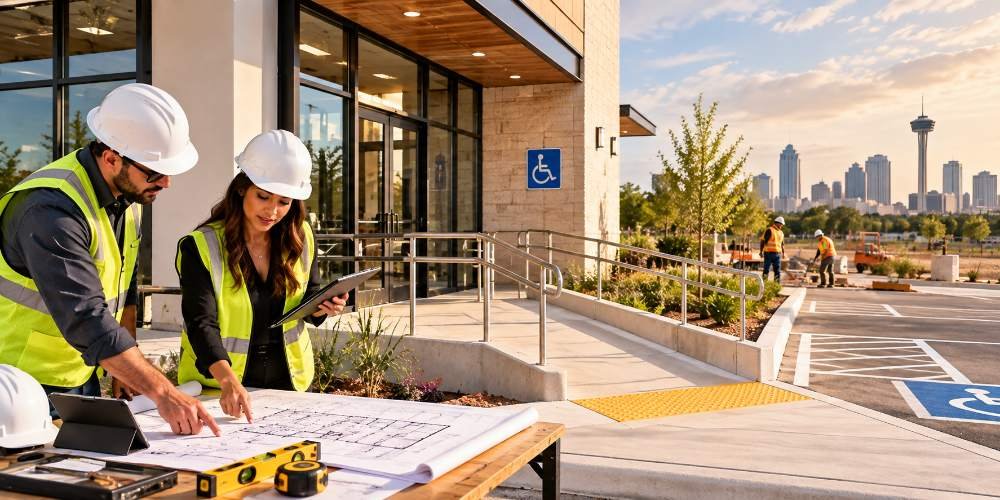
Accessibility isn’t an optional design consideration in commercial construction — it’s a legal requirement under the Americans with Disabilities Act (ADA), and non-compliance can result in costly retrofits, legal exposure, and a space that genuinely excludes potential customers and employees. Whether you’re building a new restaurant, medical office, or retail space in San Antonio, understanding ADA requirements from the start of your project saves significant time, money, and risk down the road.
This article offers general educational information about ADA compliance in commercial construction and isn’t a substitute for advice from a licensed architect, attorney, or accessibility specialist familiar with your specific project.
What Is ADA Compliance in Commercial Construction?
The Americans with Disabilities Act requires commercial facilities open to the public to be accessible to individuals with disabilities. For construction, this means following specific, detailed standards covering everything from door widths and ramp slopes to restroom layouts and parking requirements, collectively known as the ADA Standards for Accessible Design.
Key Areas of ADA Compliance in Commercial Spaces
Accessible Parking and Entrances
Commercial properties must provide a required number of accessible parking spaces based on total lot size, along with accessible routes from parking to the building entrance, free of unnecessary barriers.
Doorways and Pathways
Door widths, thresholds, and interior pathways must meet specific clearance requirements to accommodate wheelchairs and mobility devices throughout the space.
Restrooms
Accessible restrooms require specific dimensions, grab bar placement, fixture heights, and door clearances, making restroom design one of the most detailed and commonly scrutinized areas of ADA compliance.
Ramps and Elevation Changes
Any change in floor elevation typically requires a compliant ramp with specific slope, landing, and handrail requirements, rather than a simple step.
Counters and Service Areas
Reception desks, checkout counters, and similar service points require accessible height sections to accommodate seated customers and employees.
Signage
Certain signage, particularly for restrooms and room identification, must meet specific requirements including braille and raised characters.
ADA Considerations by Project Type
- Restaurants — accessible dining areas, restrooms, and a compliant path of travel throughout the dining and service areas
- Medical offices — accessible exam rooms, waiting areas, and often additional considerations for patient transfer in treatment spaces
- Retail stores — accessible aisles, fitting rooms, and checkout counters sized to accommodate mobility devices
- Fitness facilities — accessible locker rooms, pathways between equipment areas, and often specific requirements around pool or specialized equipment access
- Office spaces — accessible common areas, meeting rooms, and restrooms, even in spaces where individual workstations may have more flexibility
New Construction vs. Existing Building Renovations
New construction is generally held to the full current ADA Standards for Accessible Design. Renovations to existing buildings also generally need to meet applicable standards for the areas being altered, and significant renovations can sometimes trigger additional accessibility upgrade requirements elsewhere in the facility. This makes early planning especially important for tenant improvement projects in older San Antonio buildings.
Why ADA Compliance Should Be Planned Early, Not Added Later
Retrofitting a space for ADA compliance after construction is complete is almost always more expensive and disruptive than designing for compliance from the start. Issues discovered during inspection or, worse, after a complaint or legal claim, can require significant rework, making proactive planning during the design phase one of the most cost-effective decisions a business owner can make.
Risks of Non-Compliance
- Legal exposure — businesses can face lawsuits or complaints related to inaccessible facilities, which can result in significant legal and remediation costs
- Permit and inspection delays — non-compliant plans are typically rejected during the permitting process, delaying the entire project
- Costly retrofits — correcting non-compliant construction after the fact is almost always more expensive than building correctly from the start
- Excluded customers and employees — beyond legal risk, non-compliant spaces genuinely limit who can access and work in your business
How Sarfani Construction Approaches ADA Compliance
At Sarfani Construction, accessibility compliance is built into our planning process from the start, not treated as an afterthought during permitting. Our experience across restaurant, medical, retail, fitness, and office construction throughout San Antonio means we understand the specific accessibility requirements relevant to your project type, helping avoid costly surprises and delays.
Planning a project and want to build it right from the start? Schedule a free consultation with Sarfani Construction today.
Frequently Asked Questions
Does every commercial construction project need to meet ADA requirements?
Generally, yes, commercial facilities open to the public or employees are subject to ADA accessibility requirements, though the specific scope can vary based on whether the project is new construction or a renovation, and the nature of the business.
Do renovations to an existing building trigger ADA compliance requirements?
Generally, yes, for the areas being altered, and significant renovations can sometimes trigger additional accessibility requirements elsewhere in the facility. An architect or contractor experienced with ADA compliance can help clarify what applies to your specific renovation.
What happens if my business isn’t ADA compliant?
Non-compliance can result in legal complaints or lawsuits, permit and inspection delays during construction, and costly retrofits if issues are identified after the fact, making proactive compliance during design and construction significantly more cost-effective.
Who is responsible for ensuring ADA compliance during construction?
Architects, designers, and contractors all play a role in ensuring plans and construction meet applicable ADA standards, though ultimate responsibility for an accessible facility rests with the business or property owner.
Are ADA requirements the same for every type of commercial space?
The core standards apply broadly, but specific requirements can vary based on the type of facility and its particular features, such as dining areas in restaurants or treatment rooms in medical offices.
Can Sarfani Construction help ensure my project meets ADA requirements?
Yes, Sarfani Construction incorporates accessibility considerations into project planning from the start, working to help clients avoid compliance issues that could delay permitting or require costly rework later.
