
How Long Does Commercial Construction Take in San Antonio, TX?
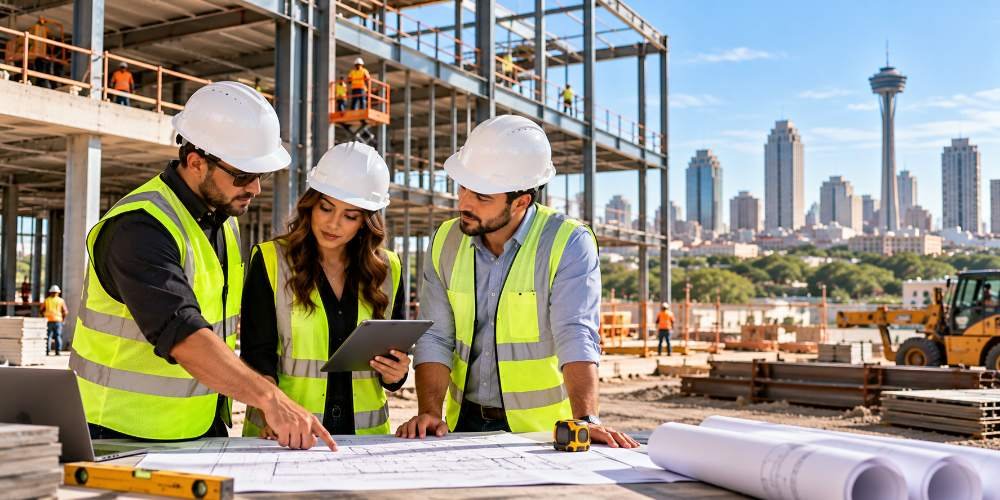
“When can we open?” is the question that drives almost every commercial construction decision. Rent may already be running, staff may be hired, and marketing may be scheduled. Yet the honest answer depends on far more than the size of the space. Permitting, design decisions, equipment lead times, and the type of project can each add or save weeks.
This guide breaks down the typical phases of a commercial project in San Antonio, general timeline ranges by project type, and the factors that most often cause delays.
The Phases of a Commercial Construction Timeline
- Planning and design — defining scope, space planning, and producing construction documents. This phase can take a few weeks for a straightforward interior project to several months for a complex or ground-up building.
- Budgeting and contractor selection — gathering bids or negotiating with a contractor and finalizing scope and contract terms.
- Permitting — submitting plans to the City of San Antonio or Bexar County and responding to review comments. Review time varies with complexity and current workload. See our guide to commercial construction permits in San Antonio.
- Procurement — ordering materials and equipment, some of which have long lead times.
- Construction — site work or demolition, structure or framing, rough-in of electrical, plumbing, and mechanical systems, finishes, and fixtures.
- Inspections and closeout — required inspections, punch list corrections, final walkthrough, and the certificate of occupancy.
General Timeline Ranges by Project Type
These are general ranges to help with early planning. Actual timelines depend on scope, building condition, permitting, and equipment, and should always be confirmed for your specific project.
- Office renovation or light tenant improvement — often a few weeks to a few months, depending on scope. See our office renovation guide.
- Retail build-out — commonly about 6 weeks to 4 months from permitting through opening. See our retail build-out guide.
- Restaurant build-out — commonly 3 to 8 months, depending on whether the space is first- or second-generation. See our restaurant construction guide.
- Fitness facility — commonly 3 to 7 months. See our fitness center construction guide.
- Medical office — commonly 3 to 9 months, factoring in additional regulatory review. See our medical office construction guide.
- Ground-up commercial building — a smaller standalone building often takes 8 to 14 months from planning through completion, and larger projects can take longer. See our ground-up construction guide.
Factors That Most Affect Your Timeline
Project Complexity
Specialized systems add time. Kitchen ventilation, medical electrical and plumbing, and fitness HVAC all require more coordination than a standard office finish-out.
Permitting and Additional Reviews
Restaurants and medical facilities often need health department or fire marshal review on top of standard building permits. Incomplete plans that get sent back for revisions can add weeks.
Equipment and Material Lead Times
Commercial kitchen equipment, specialty fixtures, and certain building materials can take weeks or months to arrive. Ordering late can leave a finished space unable to open.
Design Decisions and Changes
Late changes to layout, equipment, or finishes can trigger permit revisions and rework. Settling decisions early is one of the most effective ways to protect your schedule.
Existing Building Condition
Older buildings can reveal outdated electrical, plumbing, or structural issues once walls are opened, adding unplanned work.
Site Conditions for Ground-Up Projects
Soil, drainage, utilities, and weather all affect site work and foundation timelines before vertical construction begins.
Delivery Method
How the project is delivered can change the schedule. Our comparison of design-build vs. design-bid-build explains how overlapping design and construction can shorten timelines.
Where Delays Usually Come From
- Incomplete or inaccurate plans that require resubmission to the permitting office
- Late equipment decisions and long supplier lead times
- Unexpected conditions discovered after demolition
- Scope changes after construction has started
- Inspection failures that require rework and re-inspection
- Weather delays on exterior or site work
How to Keep Your Project on Schedule
- Work backward from your opening or lease date — build in realistic time for design and permitting, not only construction.
- Finalize equipment and design early — then protect those decisions from late changes.
- Order long-lead items as soon as possible — confirm delivery dates before they become a bottleneck.
- Submit complete, code-compliant plans — it reduces rounds of permit comments.
- Choose an experienced local contractor — familiarity with San Antonio permitting and local subcontractors keeps work moving.
- Plan a contingency in the schedule — especially for older buildings and ground-up projects.
Why San Antonio Businesses Trust Sarfani Construction With Their Schedule
At Sarfani Construction, we build the schedule around your real deadline: lease dates, opening plans, and equipment lead times. We coordinate design, permitting, subcontractors, and inspections, and we communicate early when something threatens the timeline so you can make decisions before they become delays. Our experience across restaurant, medical, fitness, retail, office, and ground-up projects in San Antonio helps us give you a realistic estimate from the start.
Have an opening date in mind? Schedule a free consultation with Sarfani Construction and we’ll talk through a realistic timeline for your project.
Frequently Asked Questions
How long does a commercial tenant improvement take in San Antonio?
It depends heavily on scope. A light interior update can take a few weeks, while a full buildout with new electrical, plumbing, and mechanical systems can take several months, including permitting.
How long does permitting take for commercial construction?
Permitting time varies with project complexity and current review workload. Simple interior work generally moves faster, while ground-up projects and those needing health or fire review typically take longer. Submitting complete plans helps avoid delays.
Why is restaurant construction slower than office construction?
Restaurants involve commercial kitchen equipment, ventilation, grease and plumbing requirements, and health department and fire marshal review, all of which add steps and lead time compared with a standard office finish-out.
What causes the most delays in commercial construction?
Common causes include incomplete plans, late equipment decisions, long material lead times, unexpected building conditions, scope changes, and failed inspections. Most can be reduced with early planning.
Can a commercial project be built faster?
Sometimes. Overlapping design and construction, ordering long-lead items early, and finalizing decisions up front can shorten schedules. Rushing without complete plans tends to cause rework instead.
How early should I contact a contractor?
As early as possible, ideally before you sign a lease or finalize a design. Early input on scope, budget, and schedule helps you avoid committing to dates that aren’t realistic.
