
Commercial Construction in San Antonio’s Climate: Heat, Storms, and Smart Planning
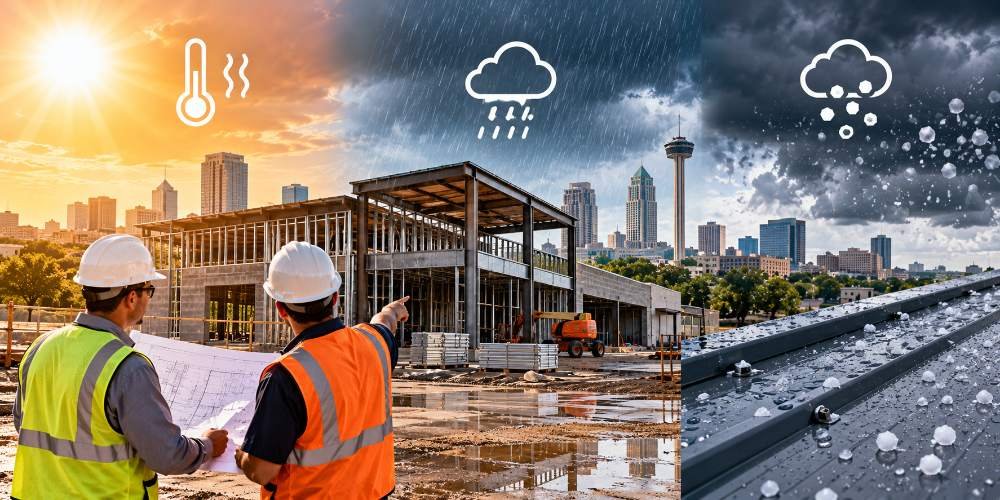
San Antonio’s weather shapes commercial buildings more than most owners realize. Long, hot summers push cooling systems hard. Heavy downpours test drainage. Hail and high winds can damage roofs and storefronts. And an occasional hard freeze can catch unprotected plumbing off guard. A project that ignores local conditions can end up with higher operating costs, repairs, and delays. One that plans for them tends to run better for decades.
This guide covers the main climate factors to plan for, how they affect design, construction, and schedule, and what to ask your contractor.
This article offers general information. Code, energy, stormwater, and floodplain requirements vary by site and change over time, so confirm them with the City of San Antonio and your design team.
Why Climate Should Shape Your Commercial Project
- Operating costs — cooling is a major utility expense in South Texas, so building choices that reduce heat gain pay back every month.
- Durability — materials and details that handle intense sun, heavy rain, hail, and wind last longer with fewer repairs.
- Comfort and safety — customers and employees notice a space that’s too hot, too cold, or humid.
- Schedule — weather affects when certain construction tasks can be done well.
Planning for Heat
Right-Sized, Efficient HVAC
Cooling load drives mechanical design in San Antonio. Undersized systems struggle on peak days, while oversized systems can cycle poorly and leave spaces feeling clammy. Spaces with heavy internal heat, such as commercial kitchens and gyms, need particular attention. See our guides to restaurant construction and fitness center construction.
Reducing Heat Gain From the Building Itself
Good insulation, reflective or light-colored roofing, quality glazing, and shading for west-facing glass and entrances all reduce the load on your HVAC. Storefront glass looks great but can bring in a lot of solar heat if it isn’t specified and shaded thoughtfully.
Roofing and Rooftop Equipment
Roofs take the brunt of the sun. Material choice, reflectivity, and proper installation affect both energy use and lifespan. Rooftop equipment also needs proper placement, support, and secure anchoring.
Working Safely and Effectively in the Heat
Extreme heat affects crews and certain materials. Experienced contractors plan work hours, hydration and rest, and material storage with summer conditions in mind, and they plan concrete work in hot weather using appropriate practices.
Planning for Heavy Rain and Drainage
San Antonio can receive intense rainfall in short periods. For ground-up projects and sites with parking lots, drainage design, grading, and stormwater requirements matter a great deal. Confirm floodplain status early, since it can affect where and how you build. For existing buildings, check roof drainage, downspouts, and how water flows around the entrances. Rain also causes schedule delays for site work and exterior tasks, so build in cushion. See our guide to ground-up commercial construction.
Planning for Hail and Wind
Severe storms with hail and strong winds are a recurring risk in Texas. Roof materials, storefront glazing, signage, rooftop units, and exterior finishes should be chosen and installed with this in mind. Talk with your insurance provider about coverage and any conditions or discounts tied to the materials you choose, so durability decisions and insurance decisions work together.
Planning for the Occasional Freeze
Freezing weather isn’t common in San Antonio, but it does happen, and buildings designed only for heat can suffer when it does. Exposed plumbing, rooftop piping, and exterior water lines deserve proper insulation and protection. Ask your design team and contractor how the building will handle a freeze, and where shutoff valves are located.
Scheduling Around the Seasons
- Summer — heat affects crew productivity and certain materials such as concrete, coatings, and adhesives. Plan hot-weather practices and early work hours.
- Spring and fall storms — heavy rain and hail can interrupt exterior work, roofing, and site work.
- Winter — cooler temperatures can help some tasks, but a cold snap can affect others, and occasional freezes require protection of materials and plumbing.
No season is trouble-free, so the key is building weather contingency into your schedule rather than assuming ideal conditions. Our guide to how long commercial construction takes in San Antonio explains where delays commonly come from.
Energy Efficiency and Operating Costs
Because cooling is such a big share of energy use here, efficiency upgrades often pay off. Common ones include better insulation, efficient HVAC equipment and controls, LED lighting, quality windows and glazing, and air sealing. Ask for a cost comparison between standard and higher-performance options, and consider your lease terms and how long you’ll occupy the space. Energy code requirements apply to many projects, so confirm what applies to yours.
How Climate Affects Different Project Types
- Restaurants — kitchen heat and ventilation add to cooling loads. See restaurant construction.
- Fitness facilities — high occupancy and intense activity require strong HVAC and humidity control. See fitness center construction.
- Medical offices — comfort, air quality, and reliable climate control matter for patients and equipment. See medical office construction.
- Retail — large storefront glass and frequent door openings affect cooling and comfort. See retail build-outs.
- Offices — daylighting and glare control need to be balanced against heat gain. See office renovation.
Questions to Ask Your Contractor
- How will you size and select HVAC for our specific space and use?
- What roofing and exterior materials do you recommend for San Antonio’s sun, hail, and wind?
- How are drainage and floodplain issues handled on this site?
- How will weather be built into the schedule?
- What protections will the building have against freezing?
- What efficiency upgrades are worth considering, and what would they cost?
Common Mistakes to Avoid
- Choosing materials and glazing for looks without considering solar heat and storm durability
- Undersizing or poorly designing HVAC for the space’s real load
- Overlooking drainage and floodplain issues until late in the project
- Assuming ideal weather in the construction schedule
- Skipping freeze protection for exposed plumbing
- Not coordinating material choices with insurance considerations
Planning for climate also reduces surprises later. See our guides to change orders and commercial construction cost to see how early decisions protect your budget.
Why San Antonio Businesses Choose Sarfani Construction
At Sarfani Construction, we build commercial projects across San Antonio and understand how local conditions affect design, construction, and long-term performance. With experience across restaurant, medical, fitness, retail, office, and ground-up projects, we help you make practical choices on HVAC, materials, drainage, and scheduling so your space performs well and stays comfortable through every season.
Planning a project and want it built for South Texas? Schedule a free consultation with Sarfani Construction today.
Frequently Asked Questions
How does San Antonio’s heat affect commercial construction?
Heat drives cooling loads and energy costs, affects roofing and material choices, and influences how and when certain construction tasks are done, especially concrete and coatings in summer.
Why is HVAC sizing so important in San Antonio?
Because cooling is a major demand here, undersized systems struggle on hot days while oversized systems can cycle poorly and leave spaces humid. Proper load calculations help ensure comfort and efficiency.
Do I need to worry about flooding for a commercial project?
You should check early. Heavy rain, drainage, and floodplain status can affect site design, costs, and permitting, so confirm requirements for your specific site with the City and your design team.
How should buildings be protected from hail?
Roofing, glazing, signage, and rooftop equipment should be selected and installed with storm durability in mind. Discuss material options and insurance implications with your contractor and insurance provider.
Does the season I build in matter?
Yes. Summer heat, spring and fall storms, and occasional winter freezes can each affect certain tasks. Building weather contingency into the schedule is more realistic than assuming perfect conditions.
Are energy-efficient upgrades worth it?
Often, especially in a cooling-heavy climate, but it depends on costs, your lease, and how long you’ll occupy the space. Ask for a comparison of standard and higher-performance options.
